- 4
- 1
- 3
- 2
📞 +977 9851085386

The Khumbu region is a well-known destination in adventure mountain tourism. Its main attraction is Mount Everest (8,848 m), the highest peak in the world. Moreover, Sagarmatha National Park in this region is listed as a UNESCO World Heritage Site.
In addition, the region is famous for its rich Sherpa culture and the sacred Tengboche Monastery. Khumjung Village also reflects traditional Sherpa life and customs. Furthermore, both the Khumbu Valley and Gokyo Valley attract adventure and nature lovers from around the world.
Popular Adventure Activities in the Everest Region
The Khumbu region offers a wide range of adventure experiences. Popular trips include the Gokyo Lake Trek, Island Peak Climbing, Mera Peak Climbing, and Lobuche Peak Climbing. In addition, major expeditions such as the Mount Everest Expedition and Ama Dablam Expedition are also organized here.
Everest Base Camp Trek
The Everest Base Camp Trek is one of the most popular trekking routes in the Himalayas. Every year, thousands of trekkers follow this iconic trail. Usually, the journey begins with a scenic flight from Kathmandu to Lukla, which saves both time and energy.
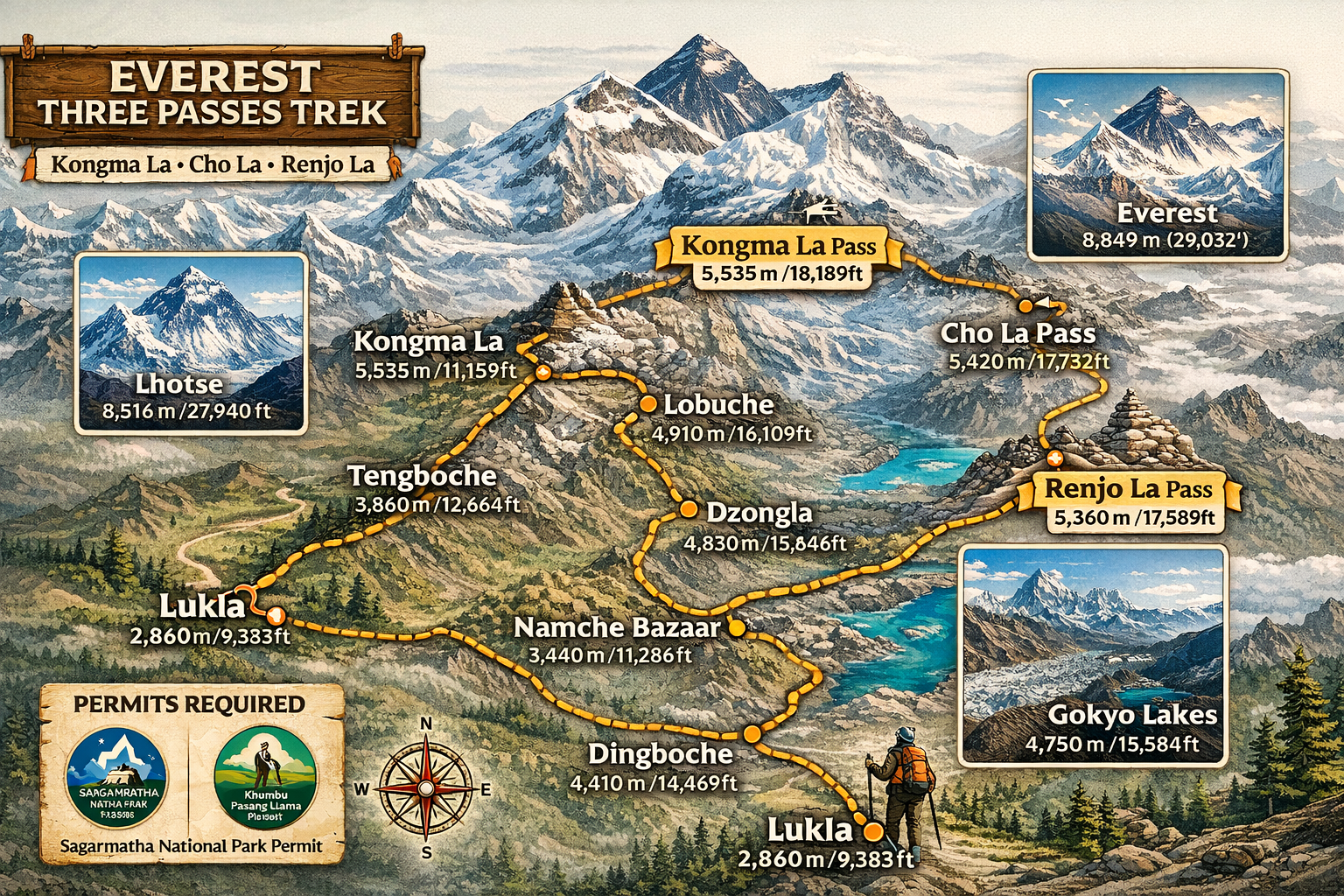
From Lukla, trekkers walk along the Dudh Koshi River toward Namche Bazaar (3,440 m). It takes about two days to reach this important trading hub. At this point, trekkers rest for acclimatization. Afterward, they continue to Dingboche (4,260 m) for further acclimatization. Finally, the trail leads to Gorakshep and onward to Everest Base Camp, with views from Kala Patthar (5,545 m).
Gokyo Valley and Gokyo Lakes Trek
The Gokyo Lake Trek is another major highlight of the Everest region. Gokyo Village lies at an elevation of 4,750 m and is one of the highest settlements in Nepal. It sits beside Dudh Pokhara, at the base of Gokyo Ri.
Moreover, Gokyo Ri (5,537 m) offers panoramic views of four 8,000-meter peaks: Everest, Lhotse, Makalu, and Cho Oyu. The route also passes near the Ngozumpa Glacier, the largest glacier in Nepal. Additionally, trekkers can cross the Cho La Pass (5,420 m) to connect with the Everest Base Camp trail.