
Turquoise lakes on the western side of Khumbu
The Gokyo Lakes Trek leaves the main Everest Base Camp trail beyond the Namche area and follows the Dudh Koshi north through Dole and Machhermo. Above Pangkha, the route climbs beside the moraine of the Ngozumpa Glacier to the chain of glacial lakes and the seasonal settlement of Gokyo.
A pre-dawn or early-morning climb of Gokyo Ri offers a broad Himalayan panorama that can include Cho Oyu, Everest, Lhotse and Makalu in clear weather. An optional walk toward the upper lakes may be considered only when acclimatisation, weather and trail conditions permit.
This itinerary returns by the same valley, avoiding a high-pass crossing. It remains strenuous because the trek sleeps near 4,800 m and reaches above 5,300 m.
Highlights
- Leave the main Base Camp trail for the western Gokyo valley
- Walk beside the Ngozumpa Glacier and its terminal moraine
- Stay beside the turquoise Dudh Pokhari at Gokyo
- Climb Gokyo Ri for a wide four-peak panorama in clear weather
- Use acclimatisation days in Namche and Machhermo/Gokyo
- Experience a quieter high-altitude alternative to Everest Base Camp
Trek route map
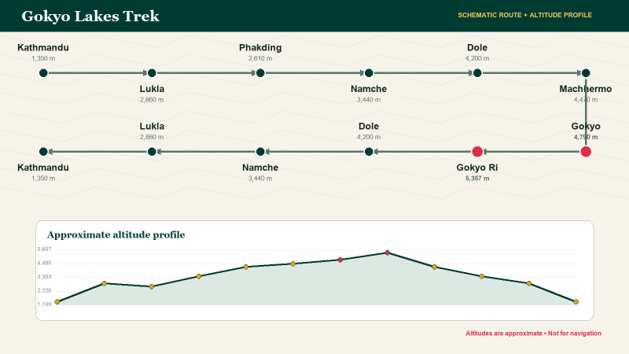
Day-by-day itinerary
Arrive in Kathmandu
Transfer to the hotel and complete the trek briefing, equipment check and review of flight and weather contingencies.
Fly to Lukla and trek to Phakding
Fly to Lukla subject to conditions, then follow the Dudh Koshi valley to Phakding. Approximately 3–4 hours; sleep near 2,610 m.
Trek to Namche Bazaar
Enter Sagarmatha National Park, cross the river bridges and climb to Namche. Approximately 5–6 hours; sleep near 3,440 m.
Acclimatise in Namche
Walk to higher ground around Syangboche, Khunde or Khumjung and return to Namche. The exact walk is chosen for conditions and the group's pace.
Trek to Dole
Follow the trail toward Kenjoma and Mong La, descend to the river and continue through forest to Dole. Approximately 5–6 hours; sleep near 4,200 m.
Trek to Machhermo
Ascend gradually through increasingly open terrain to Machhermo. Approximately 4–5 hours; sleep near 4,470 m and keep the afternoon easy.
Trek to Gokyo
Pass Pangkha, climb the terminal moraine of the Ngozumpa Glacier and continue beside the first lakes to Gokyo. Approximately 4–5 hours; sleep near 4,790 m.
Climb Gokyo Ri
Make an early ascent of Gokyo Ri if weather and health permit. Return to Gokyo and consider a conservative lakeside walk. Approximately 4–6 hours; highest point about 5,357 m.
Descend to Dole
Retrace the valley through Machhermo toward Dole. Approximately 6–7 hours, mostly descending.
Return to Namche Bazaar
Walk through forest and over Mong La to Namche. Approximately 5–6 hours.
Trek to Lukla
Descend to the Dudh Koshi and continue through Phakding to Lukla. Approximately 6–7 hours.
Fly to Kathmandu
Take the weather-dependent flight from Lukla and transfer to Kathmandu. Keep the schedule flexible.
Depart Kathmandu
Transfer to the airport or begin an agreed extension. A buffer night is recommended before a fixed international flight.
Included
- Airport transfers and private ground transfers stated in the confirmed itinerary
- Kathmandu hotel accommodation stated in the quotation, normally on a breakfast basis
- Domestic flights or road transfers stated in the final itinerary
- Licensed English-speaking trekking guide
- Porter support at the ratio and baggage allowance stated in the quotation
- Trekking accommodation specified in the confirmed programme
- Meals stated in the quotation while trekking
- Processing of route permits and entry documents listed in the quotation
- Guide and porter insurance, wages, meals, accommodation and equipment
- Basic group first-aid supplies, route coordination and government taxes
Not included
- International flights to and from Nepal
- Nepal entry visa and passport-related costs
- Travel insurance, including high-altitude trekking and emergency evacuation
- Meals in Kathmandu unless specifically listed in the quotation
- Personal trekking clothing, boots, sleeping bag and other personal equipment
- Drinks, bottled water, hot showers, charging, Wi-Fi and personal expenses on trek
- Tips for guides, porters, drivers and other staff
- Medical treatment, rescue, evacuation or repatriation costs
- Costs caused by weather, flight disruption, illness, route changes or early return
- Any service not expressly included in the final quotation
Safety and preparation
This is a high-altitude journey. Acute mountain sickness can occur above about 2,500 m, regardless of age or fitness. Ascend gradually, report symptoms promptly, do not ascend with worsening symptoms and descend when advised by the guide or a medical professional. The published itinerary is a planning framework: weather, trail, flight, health and local conditions may require delay, rerouting or early descent. Travellers need appropriate insurance that explicitly covers the trek's maximum altitude, helicopter evacuation where available, medical treatment and trip interruption. Anyone with a relevant medical history should obtain personalised advice from a clinician before booking.
ROUTE-SPECIFIC SAFETY
Gokyo Ri is optional and should be attempted only if the traveller is well acclimatised. Upper-lake excursions add distance at high altitude and may be shortened or omitted because of snow, ice, weather or symptoms.
What to pack
Packing notes
Broken-in waterproof trekking boots; moisture-wicking base layers; insulating mid-layer; warm down or synthetic jacket; waterproof shell jacket and trousers; trekking trousers; warm hat, sun hat and gloves; category-rated sunglasses; high-SPF sunscreen and lip balm; trekking poles; refillable bottles and personal water-treatment backup; head torch; personal medicines and compact first-aid items; sleeping bag of an appropriate comfort rating; duffel and daypack with rain covers; power bank; passport copies; and a small supply of cash. Final cold-weather and traction requirements must be confirmed for the departure month.
ROUTE-SPECIFIC PACKING
Carry strong sun protection and warm layers for exposed lakeside wind. Early-season or post-storm conditions may require microspikes or other traction specified by the guide.
Route
Kathmandu → Lukla → Phakding → Namche Bazaar → Dole → Machhermo → Gokyo → Gokyo Ri → Dole → Namche Bazaar → Lukla → Kathmandu
Where you stay
Kathmandu hotel and mountain lodges/teahouses, with basic facilities at higher elevations
Meals
Breakfast in Kathmandu; meals on trek as specified in the quotation
Transport
Private vehicle and return domestic flight to the operating Lukla gateway airport
Permits
Current Sagarmatha National Park, local-area and trekking documentation required for the final route
Your questions, answered
Is Gokyo an alternative to Everest Base Camp?
Yes. This route focuses on the Gokyo lakes, Ngozumpa Glacier and Gokyo Ri and does not visit Everest Base Camp.
How high is Gokyo Ri?
Published elevations vary slightly; use approximately 5,357 m / 17,575 ft and state that the figure is approximate.
Can I see Everest from Gokyo Ri?
Everest can be seen in the broad panorama in clear conditions, together with several other major Himalayan peaks.
Do I cross a high pass?
Not on this standard out-and-back Gokyo itinerary. Cho La and Renjo La belong to separate, more demanding variants.
Are the lodges comfortable?
Lodges are available on the normal route, but rooms, heating, showers, charging and Wi-Fi become simpler and less predictable higher up.
Can an upper-lake walk be added?
It may be added when acclimatisation, daylight, weather and trail conditions allow; it should never be promised as unconditional.
Explore the destination: Nepal