
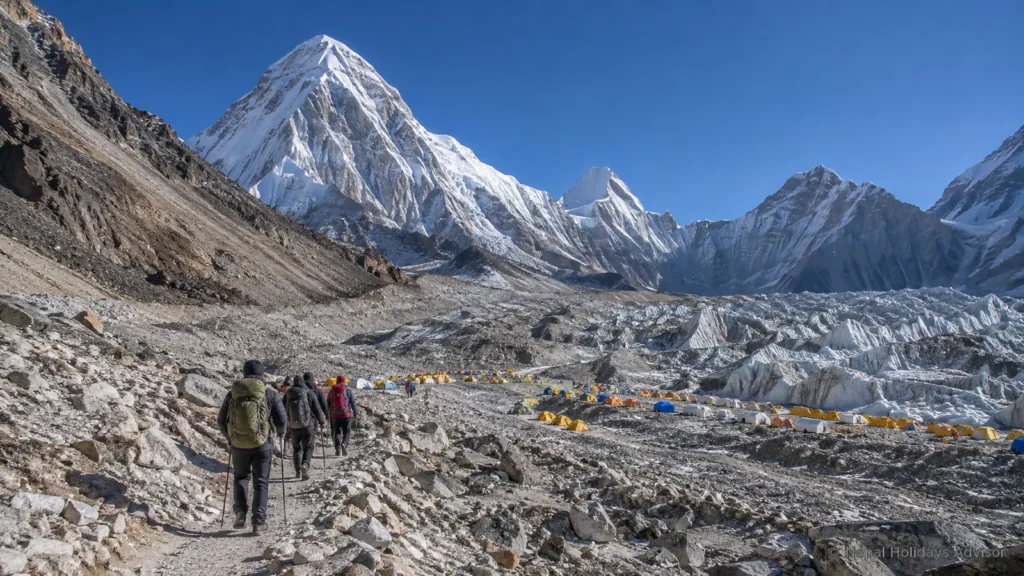
This Everest Base Camp Trek Guide explains the route, difficulty, altitude and essential preparation required for one of Nepal’s most celebrated Himalayan journeys. The trek leads through the legendary Khumbu region, passing Sherpa villages, Buddhist monasteries and dramatic mountain landscapes before reaching Everest Base Camp at 5,364 metres.
Although the trail does not require technical climbing skills, its high altitude, changing weather and consecutive walking days demand thoughtful preparation. Understanding the route, allowing enough time for acclimatization and arriving with suitable fitness will make the experience safer and more rewarding.
Everest Base Camp Trek at a Glance
| Detail | Information |
| Location | Khumbu, Everest Region, Nepal |
| Typical duration | Approximately 14 days |
| Starting and ending point | Lukla |
| Base Camp elevation | 5,364 metres |
| Highest viewpoint | Kala Patthar |
| Difficulty | Challenging high-altitude trek |
| Technical climbing required | No |
| Accommodation | Mountain teahouses and lodges |
| Best trekking seasons | March–May and late September–November |
Everest Base Camp Trek Route
The classic Everest Base Camp trek route begins with a scenic mountain flight to Lukla. From there, the trail follows the Dudh Koshi valley, enters Sagarmatha National Park near Monjo and climbs towards Namche Bazaar. It then continues through Tengboche, Dingboche, Lobuche and Gorak Shep before reaching Everest Base Camp.
- Fly to Lukla and trek to Phakding
- Trek from Phakding to Namche Bazaar
- Acclimatization day in Namche Bazaar
- Trek from Namche Bazaar to Tengboche
- Trek from Tengboche to Dingboche
- Acclimatisation day in Dingboche
- Trek from Dingboche to Lobuche
- Trek to Gorak Shep and visit Everest Base Camp
- Climb Kala Patthar and descend towards Pheriche
- Continue from Pheriche to Namche Bazaar
- Descend from Namche Bazaar to Lukla
- Fly from Lukla to Kathmandu or Ramechhap
Exact overnight stops and flight arrangements can vary according to weather, trail conditions and the chosen itinerary. A well-designed schedule should include acclimatization days rather than attempting to reach Base Camp too quickly.
How Difficult Is the Everest Base Camp Trek?
The Everest Base Camp trek is a challenging high-altitude journey, but the standard route does not require technical climbing experience. The main difficulty comes from the increasing elevation, consecutive walking days, uneven terrain and changing mountain weather rather than ropes or specialist climbing equipment.
Trekkers should be prepared for the following challenges:
- High altitude and reduced oxygen levels
- Several consecutive days of trekking
- Steep ascents, descents and stone steps
- Rocky and uneven trails
- Cold temperatures and rapidly changing weather
- Basic accommodation at higher elevations
- The mental effort required to continue when tired
People with reasonable fitness and proper preparation can complete the trek successfully when following a gradual itinerary. Fitness alone cannot prevent altitude illness, so walking slowly, allowing time for acclimatization and communicating symptoms honestly are essential.
Altitude and Acclimatisation
The route rises gradually from Lukla to Everest Base Camp at 5,364 metres. As elevation increases, the body needs sufficient time to adjust to reduced oxygen levels. Acclimatisation days in Namche Bazaar and Dingboche are therefore essential parts of a responsible itinerary rather than optional rest days.
Early Symptoms to Take Seriously
- Headache
- Unusual tiredness or weakness
- Dizziness
- Loss of appetite
- Nausea or vomiting
- Difficulty
- sleeping combined with other symptoms
Do not continue ascending when symptoms of altitude illness are present. Inform your guide immediately, rest at the same elevation and monitor the symptoms carefully.
Emergency Warning Signs
- Confusion or unusual drowsiness
- Difficulty walking straight or loss of coordination
- Shortness of breath while resting
- Chest congestion or a worsening cough
- Severe weakness or rapidly worsening symptoms
These warning signs require urgent action, which normally includes descending and seeking professional medical assistance. No itinerary or goal is more important than a traveller’s safety.
Travellers with existing health conditions or concerns about high altitude should consult a qualified medical professional before the trek. This information provides general preparation guidance and does not replace individual medical advice.
How to Prepare for the Everest Base Camp Trek
Good preparation improves comfort, confidence and recovery throughout the trek. Begin training approximately eight to twelve weeks before departure, or earlier if you are not currently active. The goal is to build steady endurance rather than short bursts of maximum effort.
Physical Training
A balanced preparation programme should include:
- Regular walking and progressively longer hikes
- Uphill walking, stair climbing or incline treadmill sessions
- Cardiovascular exercise such as cycling, swimming or jogging
- Strength exercises for the legs, hips and core
- Practice hikes on consecutive days
- Walking with the daypack you plan to carry
- Rest and recovery days between harder sessions
Whenever possible, train on hills and uneven surfaces. Being comfortable walking for several hours at a steady pace is more valuable than focusing only on speed.
Footwear and Equipment
Break in your trekking boots well before travelling and test your clothing layers in different weather conditions. Your equipment should protect you from cold, wind and strong sunlight without adding unnecessary weight. Use our Nepal trekking packing list to prepare the essential clothing, footwear and personal equipment.
Mental Preparation
Some days will feel longer or colder than expected, and mountain weather may require changes to the schedule. Patience, flexibility and a willingness to walk slowly are as important as physical strength.
Best Time for the Everest Base Camp Trek
Spring and autumn are generally the most suitable seasons for the Everest Base Camp trek. However, the right period depends on your preferred temperatures, scenery, trail atmosphere and tolerance for changing conditions.
Spring: March to May
Spring usually brings milder daytime temperatures, longer daylight hours and flowering rhododendrons at lower elevations. April and May also coincide with the main Everest climbing season, creating a lively atmosphere around Base Camp. Popular sections of the trail can be busy.
Autumn: Late September to November
Autumn is known for clearer skies, strong mountain visibility and generally settled trekking conditions following the monsoon. October is especially popular, while November often brings colder mornings and nights with fewer trekkers later in the month.
Winter: December to February
Winter offers quieter trails and crisp mountain views, but temperatures become extremely cold at higher elevations. Snow may affect sections of the route, and shorter daylight hours require careful daily planning.
Monsoon: June to Mid-September
Monsoon is the least popular period for this trek. Rain, cloud, slippery lower trails and possible flight disruption can affect the journey. Anyone considering these months should allow additional flexibility and prepare for changing conditions.
For a broader comparison of Nepal’s seasons and regional weather, read our Best Time to Visit Nepal guide.
Permits Required for the Everest Base Camp Trek
Trekkers must carry the permits and registrations required for the Everest region. These are checked at different points along the route, so keep the original documents accessible throughout the journey.
The usual requirements include:
- Sagarmatha National Park entry permit
- Khumbu Pasang Lhamu Rural Municipality trekking permit or local registration
- Any current TIMS or national trekker-registration requirement applicable at the time of travel
Permit names, fees and procedures may change. Confirm the latest requirements shortly before departure rather than relying on outdated online information. When travelling with Nepal Holidays Advisor, our local team will verify and arrange the permits included in your itinerary.
Read our complete guide to trekking permits in Nepal for further preparation.
Flights to Lukla and Possible Delays
Most Everest Base Camp journeys begin with a short mountain flight to Lukla. Depending on the trekking season, air-traffic arrangements and airline schedule, flights may depart from Kathmandu or from Manthali Airport in Ramechhap.
When flights operate from Ramechhap, travellers normally leave Kathmandu very early for the road transfer to Manthali. Your confirmed departure airport and transfer arrangements should always be checked shortly before the trek.
Weather and Flight Disruption
Flights to and from Lukla depend heavily on visibility, wind and mountain weather. Delays, rescheduling and occasional cancellations are possible even during the main trekking seasons.
Keep at least one or two flexible days near the end of your Nepal itinerary whenever possible. This reduces pressure if the return flight from Lukla is delayed and helps protect onward international travel arrangements.
Baggage Allowance
Small mountain aircraft have strict baggage limits. Allowances differ between airlines and may change, so confirm the permitted checked baggage and hand luggage before packing. Keeping equipment practical and lightweight will make both the flight and the trek easier.
Accommodation, Meals and Facilities
The Everest Base Camp route has a well-established network of mountain teahouses and lodges. Facilities are more comfortable in larger settlements such as Lukla and Namche Bazaar, then become increasingly simple as the trail climbs higher.
Teahouse Accommodation
Rooms are usually basic and designed for two people, with beds, mattresses, pillows and blankets. Bathrooms may be shared, particularly at higher elevations. Dining rooms are commonly heated in the evening, but bedrooms are generally not, making a suitable sleeping bag essential.
Hot showers, battery charging and internet access may be available for an additional charge. Availability and reliability vary between villages.
Meals and Drinking Water
Teahouse menus commonly include dal bhat, soups, rice, noodles, potatoes, pasta, momos, eggs and simple breakfast dishes. Food and drinks generally become more expensive at higher elevations because supplies must be transported by porters, pack animals or aircraft.
Drink boiled or properly treated water throughout the trek. Carrying a reusable bottle and reliable treatment method helps reduce dependence on single-use plastic bottles.
Internet and Mobile Connection
Mobile signal and Wi-Fi are available in some settlements, but connections can be slow or unavailable because of weather, power or network conditions. Travellers should not depend on continuous internet access during the trek.
How Much Does the Everest Base Camp Trek Cost?
There is no single price that suits every Everest Base Camp journey. The total depends on the itinerary, level of service, group size and travel arrangements. Nepal Holidays Advisor provides a personalised quotation after understanding each traveller’s dates, preferences and support requirements.
The main factors affecting the cost include:
- Length of the itinerary and number of acclimatisation days
- Private or small-group travelGuide and porter services
- Flights and transfers to or from Lukla
- Accommodation and meal arrangements
- Required permits and local fees
- Seasonal flight and lodge availability
- Equipment rental and additional baggage
- Travel insurance and emergency coverage
- Personal expenses such as showers, charging, Wi-Fi, drinks and tips
Compare what is included rather than choosing only by the lowest advertised price. A responsible quotation should clearly explain the itinerary, services, exclusions and contingency arrangements before you make a decision.
Travel Insurance for the Everest Base Camp Trek
Comprehensive travel insurance is essential for the Everest Base Camp trek. Standard policies may exclude high-altitude trekking, so confirm that your policy covers the highest altitude in your itinerary, including Kala Patthar if you plan to climb it.
Your policy should cover:
- High-altitude trekking and altitude-related illness
- Emergency helicopter evacuation and mountain rescue
- Overseas medical treatment and hospital expenses
- Trip cancellation, interruption and unexpected delays
- Delayed or cancelled mountain flights
- Lost, delayed or damaged baggage and trekking equipment
- Emergency repatriation when medically necessary
Read the policy wording and exclusions carefully. Declare any pre-existing medical conditions and ask the insurer to confirm your high-altitude trekking coverage in writing. Carry your policy number and the insurer’s emergency contact details throughout the trek.
For further guidance, read our travel insurance for Nepal guide before choosing a policy.
Guides, Porters and Responsible Trekking
Trekking with an experienced local guide can make the Everest Base Camp journey safer, smoother and more meaningful. A guide can manage accommodation, permits and changing flight arrangements while helping travellers understand local culture, trail conditions and appropriate acclimatisation practices.
Hiring a Porter
A porter can reduce the physical strain of carrying equipment at high altitude. Before the trek, confirm the porter service, baggage allowance and any weight restrictions included in your arrangement. Pack only essential items and use a responsible company that provides its trekking staff with suitable equipment, accommodation, insurance and manageable workloads.
Respecting the Khumbu Region
The Everest region is home to Sherpa communities, Buddhist monasteries and environmentally sensitive mountain landscapes. Travellers should:
- Stay on established trails
- Avoid leaving rubbish behind
- Use refillable bottles and safe drinking-water treatments
- Respect monasteries, prayer monuments and local traditions
- Ask permission before photographing local people
- Follow the instructions of guides, park officials and community representatives
- Avoid disturbing wildlife or removing natural and cultural objects
Responsible trekking helps protect the Khumbu region while ensuring tourism continues to benefit local communities.
Frequently Asked Questions About the Everest Base Camp Trek
How long does the Everest Base Camp trek take?
A typical Everest Base Camp itinerary takes approximately 12 to 14 days from Lukla, including acclimatisation days and the return journey. Travellers should also keep one or two flexible days for possible mountain-flight disruption.
How difficult is the Everest Base Camp trek?
The trek is physically challenging because of its altitude, changing weather, uneven trails and consecutive walking days. It does not normally require technical climbing skills, but suitable fitness, preparation and gradual acclimatisation are essential.
What is the highest point of the trek?
Everest Base Camp stands at 5,364 metres. Many itineraries also include an early-morning climb of Kala Patthar, which rises higher than Base Camp and offers remarkable Himalayan views in clear weather.
Can beginners complete the Everest Base Camp trek?
A well-prepared beginner with good general fitness may complete the trek successfully. Previous multi-day hiking experience is helpful, and travellers should follow a sensible itinerary with sufficient acclimatisation time.
What are the best months for the Everest Base Camp trek?
The most popular trekking periods are from March to May and from late September to November. These seasons generally provide more favourable trail conditions and mountain visibility, although Himalayan weather can change quickly.
Do I need technical climbing equipment?
Technical climbing equipment is not normally required for the standard Everest Base Camp route. Travellers need reliable trekking boots, warm layered clothing, weather protection and other suitable high-altitude trekking equipment.
Is altitude sickness a risk?
Yes. Altitude sickness can affect anyone regardless of age, experience or fitness. Travellers should ascend gradually, remain aware of symptoms and never continue higher when symptoms are worsening.
Are showers, charging and internet available?
Many teahouses provide hot showers, battery charging and Wi-Fi for an additional fee. Availability, reliability and cost vary by location, and services generally become more limited at higher elevations.
Is travel insurance necessary?
Comprehensive travel insurance is strongly recommended. The policy should explicitly cover high-altitude trekking, altitude-related illness, emergency medical treatment and helicopter evacuation from the highest point in your itinerary.
Can flights to Lukla be delayed?
Yes. Lukla flights depend on visibility, wind and mountain weather, so delays and cancellations are possible. Keeping flexible days before an international departure reduces the risk of disrupted onward travel.
Plan Your Everest Base Camp Trek
Every traveller has different time, experience, pace and service preferences. Nepal Holidays Advisor can help you create a thoughtfully paced Everest Base Camp itinerary with suitable acclimatisation, local guides, porter support and carefully arranged mountain logistics.
Tell us your preferred travel dates, group size and trekking experience. We will explain the proposed itinerary, included services and estimated price before you make any commitment.