A high-pass circuit through the Thame and Gokyo valleys
Renjo La connects the Gokyo valley with the upper Bhote Koshi route toward Thame and Nangpa La. This itinerary uses the quieter western approach from Namche through Thame and Lungden, then crosses the pass to Gokyo after dedicated acclimatisation.
From the pass, the descent reveals the Gokyo lakes and a wide Himalayan horizon. A separate ascent of Gokyo Ri may be attempted the next morning before the route descends through Machhermo and Dole to Namche.
The pass is exposed and can hold snow or ice. The direction, timing and final route must remain flexible, and the crossing is subject to the guide’s assessment.
Highlights
- Leave the busiest trail for the historic Thame and Bhote Koshi valley
- Use a dedicated acclimatisation day around Lungden
- Cross Renjo La for a dramatic first view into the Gokyo basin
- Stay beside the turquoise Gokyo lakes
- Climb Gokyo Ri for a broad Himalayan panorama
- Complete a circuit with contrasting approach and descent valleys
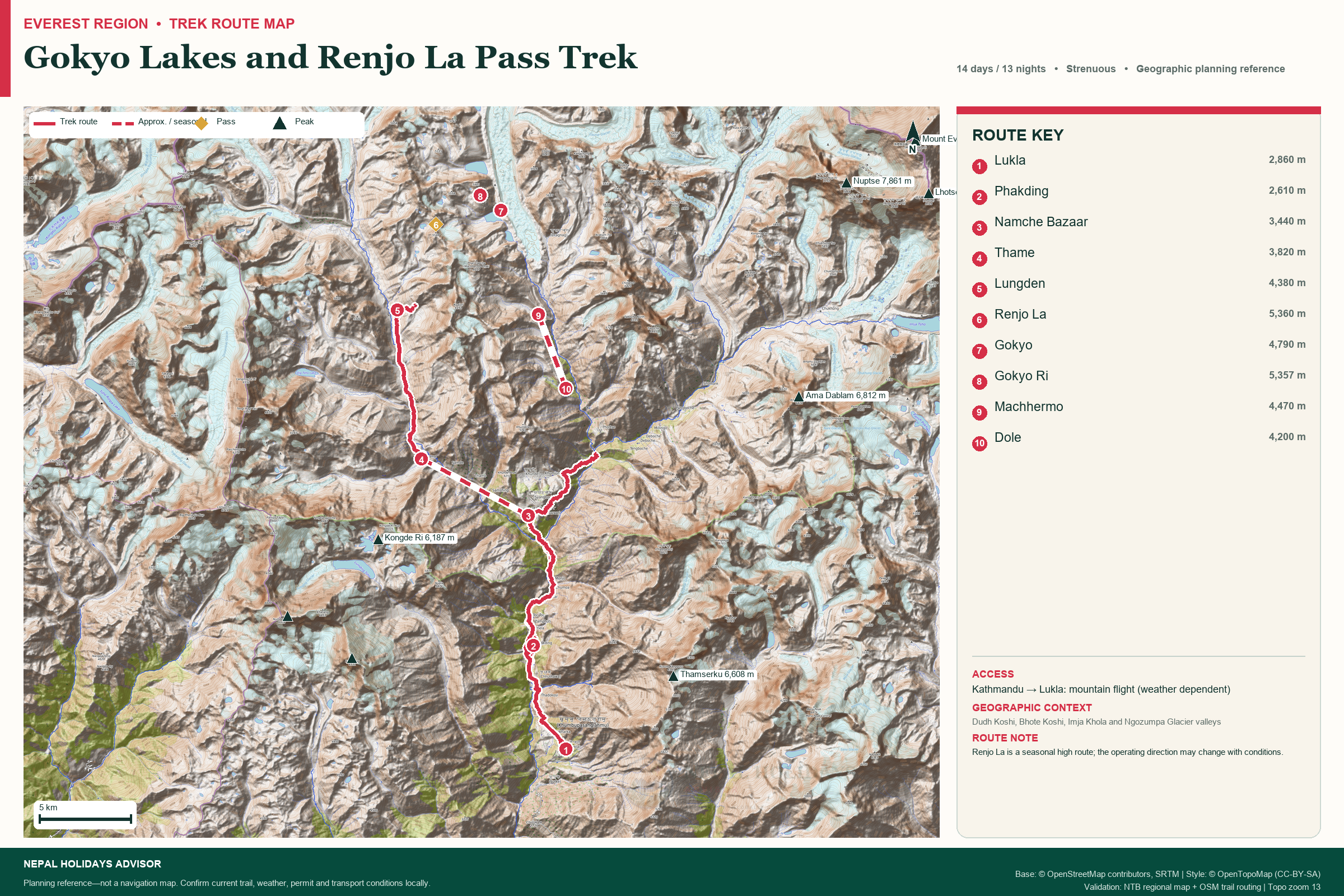
Trek route map
Day-by-day itinerary
Arrive in Kathmandu
Transfer to the hotel and review equipment, pass strategy, flight contingencies and insurance documentation.
Fly to Lukla and trek to Phakding
Fly to Lukla subject to conditions and walk down the Dudh Koshi valley. Approximately 3–4 hours; sleep near 2,610 m.
Trek to Namche Bazaar
Enter Sagarmatha National Park and climb to Namche. Approximately 5–6 hours; sleep near 3,440 m.
Acclimatise in Namche
Walk to higher ground around Syangboche, Khunde or Khumjung and return to sleep in Namche.
Trek to Thame
Turn west into the Bhote Koshi valley and continue to the traditional settlement of Thame. Approximately 4–5 hours; sleep near 3,820 m.
Trek to Lungden
Ascend the quieter upper valley through small seasonal settlements to Lungden. Approximately 5–6 hours; sleep near 4,380 m.
Acclimatise at Lungden
Take a controlled walk to higher ground and return to Lungden. The guide assesses weather, snow, group health and equipment for Renjo La.
Cross Renjo La to Gokyo
Start early, climb to Renjo La and descend carefully to the Gokyo lakes. Approximately 7–9 hours; pass altitude about 5,360 m; sleep near 4,790 m.
Climb Gokyo Ri
Attempt Gokyo Ri early if health and weather allow, then rest or walk beside the lakes. Approximately 4–6 hours; highest point about 5,357 m.
Descend to Dole
Walk down the Gokyo valley through Machhermo to Dole. Approximately 6–7 hours.
Return to Namche Bazaar
Cross Mong La and continue to Namche. Approximately 5–6 hours.
Trek to Lukla
Descend to the Dudh Koshi and continue through Phakding to Lukla. Approximately 6–7 hours.
Fly to Kathmandu
Take the weather-dependent Lukla flight and transfer to Kathmandu. Keep the day available for disruption.
Depart Kathmandu
Transfer to the airport or begin an agreed extension, ideally with a buffer before international travel.
Included
- Airport transfers and private ground transfers stated in the confirmed itinerary
- Kathmandu hotel accommodation stated in the quotation, normally on a breakfast basis
- Domestic flights or road transfers stated in the final itinerary
- Licensed English-speaking trekking guide
- Porter support at the ratio and baggage allowance stated in the quotation
- Trekking accommodation specified in the confirmed programme
- Meals stated in the quotation while trekking
- Processing of route permits and entry documents listed in the quotation
- Guide and porter insurance, wages, meals, accommodation and equipment
- Basic group first-aid supplies, route coordination and government taxes
Not included
- International flights to and from Nepal
- Nepal entry visa and passport-related costs
- Travel insurance, including high-altitude trekking and emergency evacuation
- Meals in Kathmandu unless specifically listed in the quotation
- Personal trekking clothing, boots, sleeping bag and other personal equipment
- Drinks, bottled water, hot showers, charging, Wi-Fi and personal expenses on trek
- Tips for guides, porters, drivers and other staff
- Medical treatment, rescue, evacuation or repatriation costs
- Costs caused by weather, flight disruption, illness, route changes or early return
- Any service not expressly included in the final quotation
Safety and preparation
This is a high-altitude journey. Acute mountain sickness can occur above about 2,500 m, regardless of age or fitness. Ascend gradually, report symptoms promptly, do not ascend with worsening symptoms and descend when advised by the guide or a medical professional. The published itinerary is a planning framework: weather, trail, flight, health and local conditions may require delay, rerouting or early descent. Travellers need appropriate insurance that explicitly covers the trek's maximum altitude, helicopter evacuation where available, medical treatment and trip interruption. Anyone with a relevant medical history should obtain personalised advice from a clinician before booking.
ROUTE-SPECIFIC SAFETY
Renjo La is an exposed high pass. Snow cover, ice, high wind or poor visibility can make the crossing unsafe. The guide must be able to reverse or change the route, and the published direction should not be sold as unconditional.
What to pack
Broken-in waterproof trekking boots; moisture-wicking base layers; insulating mid-layer; warm down or synthetic jacket; waterproof shell jacket and trousers; trekking trousers; warm hat, sun hat and gloves; category-rated sunglasses; high-SPF sunscreen and lip balm; trekking poles; refillable bottles and personal water-treatment backup; head torch; personal medicines and compact first-aid items; sleeping bag of an appropriate comfort rating; duffel and daypack with rain covers; power bank; passport copies; and a small supply of cash. Final cold-weather and traction requirements must be confirmed for the departure month.
ROUTE-SPECIFIC PACKING
Carry full cold-weather layers, trekking poles and route-appropriate traction. Final equipment requirements must be issued after seasonal conditions and the group's experience are reviewed.
Route
Kathmandu → Lukla → Phakding → Namche Bazaar → Thame → Lungden → Renjo La → Gokyo → Gokyo Ri → Dole → Namche Bazaar → Lukla → Kathmandu
Where you stay
Kathmandu hotel and mountain lodges/teahouses; simple accommodation around Lungden and Gokyo
Meals
Breakfast in Kathmandu; meals on trek as specified in the quotation
Transport
Private vehicle and return domestic flight to the operating Lukla gateway airport
Permits
Current Sagarmatha National Park, local-area and trekking documentation required for the final route
Your questions, answered
What is the difference between this trek and the standard Gokyo route?
This circuit approaches through Thame and Lungden and crosses Renjo La into Gokyo, rather than walking up and down the Dole–Machhermo valley.
How high is Renjo La?
Published figures vary slightly; use approximately 5,360 m and state that the altitude is approximate.
Is Renjo La guaranteed?
No. The crossing depends on snow, wind, visibility, group health, equipment and the guide's assessment.
Does the itinerary include Gokyo Ri?
Yes, as a weather- and health-dependent optional ascent after the pass crossing.
Is the route quieter than Everest Base Camp?
The Thame–Lungden approach is generally quieter, though Gokyo and the main trail near Namche can still be busy in peak seasons.
Can the circuit be walked in reverse?
It can be designed in either direction, but acclimatisation, pass conditions and lodge logistics should determine the final plan.
Explore the destination: Nepal